
Carla Monteiro
Friday, 30 Oct 2026
 13
Contract For the Maritime Carriage of Passengers in Cape Verde
 Array


In an archipelagic country such as Cape Verde, maritime passenger transport plays a vital role in connecting the islands and facilitating the movement of people.
In addition to its obvious economic and social importance, maritime transport establishes a genuine contractual relationship between the passenger and the carrier, giving rise to rights and obligations for both parties.
The Cape Verde Maritime Code, adopted by Law No. 24/X/2023 of 5 May, devotes Title III of Book VII to contracts for the carriage of passengers by sea, setting out, in Articles 555 to 571, a set of specific rules on the formation of the contract, the rights and obligations of the parties, and the carrier’s liability.
Understanding this framework is particularly important for passengers, but also for companies operating maritime transport services, as failure to comply with the legally established obligations may give rise to claims for compensation.
What is a contract for the carriage of passengers by sea?
A contract for the carriage of passengers by sea is one whereby the carrier undertakes to carry a person on board a ship from one port to another, in return for payment of a fee known as the fare.
This is a contractual relationship in which, on the one hand, there is the carrier, who undertakes to provide the carriage, and, on the other, the passenger, who acquires the right to be carried under the agreed terms, in return for payment of the relevant fare.
This regime is of particular importance in inter-island maritime transport, which the Code defines as transport taking place between ports or locations situated within national maritime waters.
Passengers’ rights that cannot be waived by contract
Under this provision, any clauses intended to curtail the rights conferred on passengers by the Maritime Code are null and void.
This means that general conditions of carriage, internal regulations or other contractual clauses that do not allow the carrier to waive or curtail the rights that the Code imperatively grants to the passenger are invalid.
This is an important safeguard of contractual protection, particularly because, in practice, passengers usually purchase a ticket subject to conditions previously established by the carrier, leaving them with little real scope to negotiate the terms of the contract individually.
The ticket as evidence of the contract
The contract for the carriage of passengers by sea is evidenced by the ticket issued by the carrier or its representative, which is of particular legal significance.
As the ticket is, as a general rule, personalised and non-transferable, the contractual relationship ceases only with the express consent of the carrier.
Therefore, the ticket should not be regarded merely as a document required for boarding. It also constitutes an important means of proving the contractual relationship and the terms under which the carriage was contracted.
The obligation to ensure the seaworthiness and safety of the ship
The carrier is not merely obliged to transport the passenger from one port to another; the carriage must also be carried out on a vessel that is seaworthy and suitably fitted out, equipped and provisioned for the voyage. The carrier must act appropriately and diligently in complying with the safety conditions imposed by the applicable rules and practices, as this is an essential obligation.
Passenger safety is a fundamental aspect of the contract of carriage by sea and is directly linked to the carrier’s liability in the event of an accident. Therefore, as a general rule, the journey must also be undertaken on the vessel specified on the ticket.
Any substitution of the vessel requires the passenger’s express consent, except in cases of unforeseeable circumstances or force majeure, in which case the carrier may use another vessel of equivalent quality.
What happens when there is a delay in departure?
One of the most common situations in maritime transport is a delay in the ship’s departure; it is therefore necessary to provide specific protection for passengers when the delay is in fact attributable to the carrier.
Passenger rights:
- accommodation and meals on board during the period of delay, where meals are included in the ticket price;
- accommodation and meals at the carrier’s expense, in accordance with the relevant price lists, where meals are not included; and
- indemnização pelos danos sofridos.
In the event of delays exceeding twelve hours, the passenger is entitled to terminate the contract with the carrier.
Consequently, a delay attributable to the carrier is not a legally irrelevant situation. Depending on the circumstances, it may give rise not only to obligations to provide assistance, but also to the right to terminate the contract and to compensation.
Passenger obligations
Passengers undertake to comply with the laws and regulations in force and with the instructions given by the captain during the voyage, relating to on-board discipline and the safety of the voyage.
Prevention of travel
If a passenger is unable to travel for a reason attributable to the carrier, Article 563 grants them two fundamental rights:
- an immediate refund of the ticket price; and
- compensation for the damage suffered.
On the other hand, where the disruption results from unforeseeable circumstances or force majeure, the passenger is entitled to a refund of the fare, but not to the compensation provided for in the event of a breach attributable to the carrier.
This distinction is legally significant because the existence of damage does not, in itself, automatically imply liability for compensation.
It is necessary to determine the cause of the disruption and to ascertain whether or not it can be legally attributed to the carrier.
Accidents and personal injury: when is the carrier liable?
The carrier is liable for any injury sustained by a passenger in cases where:
- on board the ship, during the travel; and
- from the start of loading operations until the end of unloading operations, provided that the damage results from circumstances attributable to the carrier.
It is for the passenger to prove wilful misconduct or mere negligence on the part of the carrier or its agents, as well as, in particular, a breach of the obligation to ensure the seaworthiness of the vessel.
What should a passenger do if they encounter a problem during a sea journey?
In the event of a significant delay, cancellation, disembarkation at a different port, loss or damage to luggage, or an accident during the journey, passengers are advised to:
- Keep your ticket and all documents relating to your journey;
- Record the incident, including the date, time, location and circumstances of what happened;
- Keep receipts for any expenses incurred as a result of the delay, cancellation or other breach;
- Gather medical documents, photographs or other evidence where personal injury has occurred;
- Submit a complaint to the carrier, preferably in writing;
- Seek legal advice where there is significant damage or where the carrier refuses to provide the necessary compensation.
Documentary evidence may prove decisive in determining whether a breach has occurred, who is liable for it, and the extent of the damages.
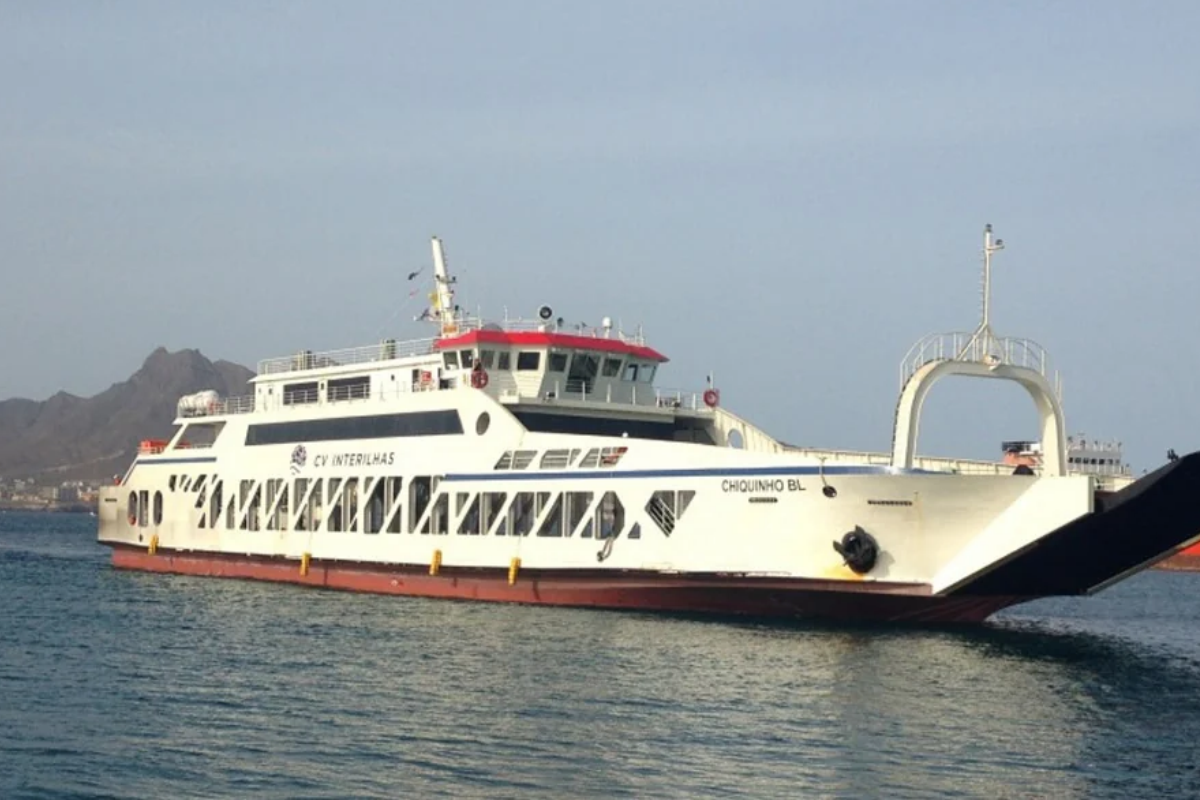
📸CV Interilhas