
Carla Monteiro
Tuesday, 01 Sep 2026
 24
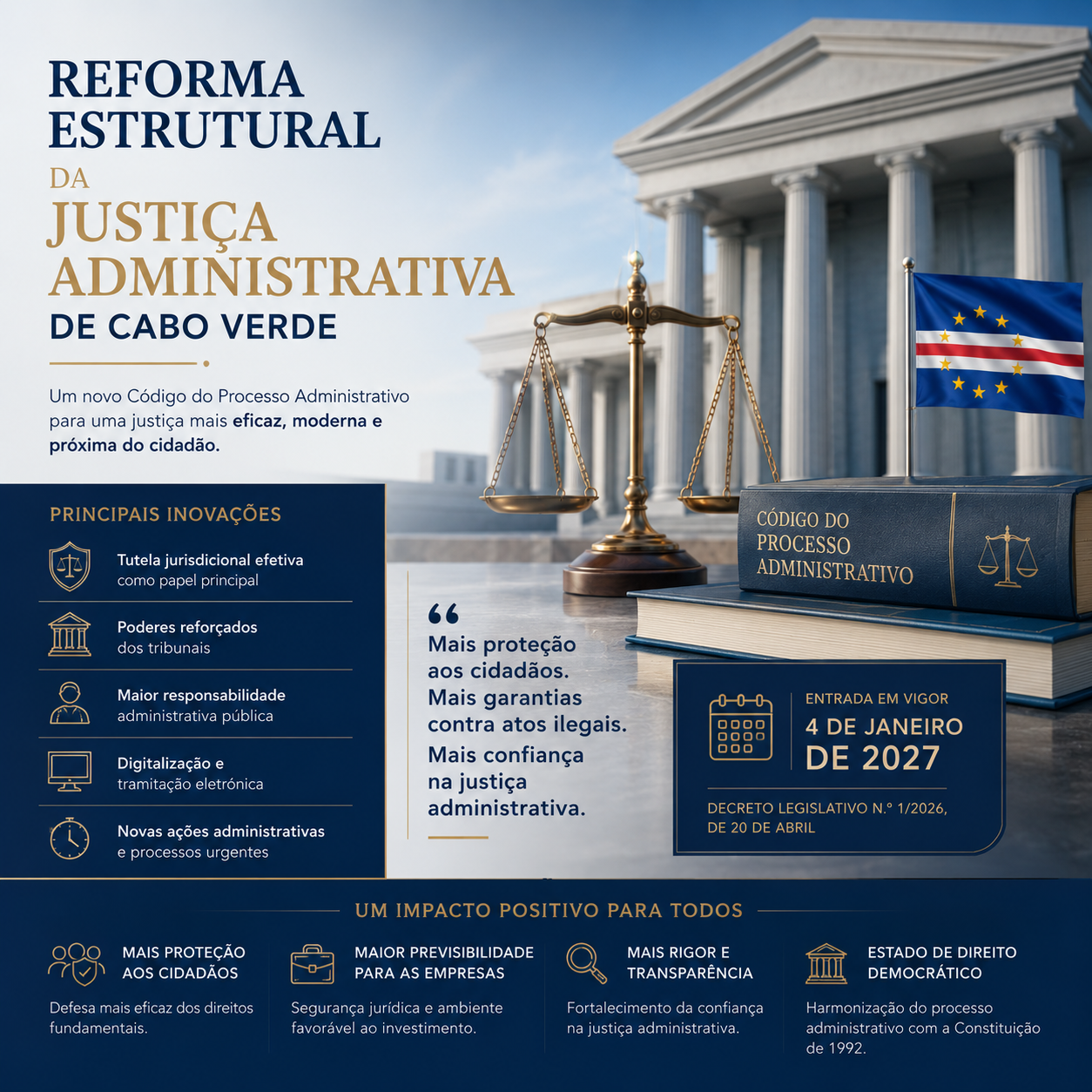
24Legislative Decree No. 1/2026 of 20 April: The Structural Reform of the Cape Verdean Administrative Litigation System
 Array
Array


The publication of Legislative Decree No. 1/2026 of 20 April, which enacts the new Code of Administrative Procedure (CPA), represents one of the most significant legislative milestones in the Cape Verdean justice system. This legislation replaces the administrative litigation regime approved by Decree-Law No. 14-A/83 of 22 March, which remained in force for more than four decades, despite the profound constitutional, political and social changes that have taken place in Cape Verde since 1992.
The reform comes against a backdrop of growing demands for the protection of individuals’ rights in relation to the public administration, seeking to ensure the implementation of the constitutional principle of effective judicial protection enshrined in Article 245(e) of the Constitution of the Republic.
The Need for Reform
The previous system was based on a traditional model of administrative litigation aimed solely at annulment, characterised by the limitation of the administrative judge’s powers to assessing the legality of administrative acts and their possible annulment. This system proved insufficient to meet the demands of the modern democratic rule of law, where the protection of citizens’ rights requires broader and more effective procedural instruments.
The 1992 Constitution enshrined a set of fundamental rights of citizens vis-à-vis the public administration, including the right to challenge harmful acts, to apply for interim measures and to demand the performance of administratively required acts. However, the procedural legislation in force did not provide adequate mechanisms for the full realisation of these rights.
Consequently, the new Code emerges as a response to the need for harmonisation between the administrative procedural system and the current constitutional order.
Key Innovations in the New Code
- The Establishment of Effective Judicial Protection
The new CPA places effective judicial protection at the heart of the administrative procedural system. The legislature makes it clear that administrative proceedings must ensure that citizens receive a judicial decision within a reasonable timeframe, through fair proceedings and with the force of res judicata.
This approach represents a paradigm shift, shifting the focus of administrative proceedings from the mere scrutiny of legality to the effective protection of the legally protected rights and interests of private individuals.
2. Extension of Procedural Means
The legislation introduces new procedural mechanisms designed to strengthen the judicial protection of citizens and businesses in their dealings with the public administration. The main new provisions include:
- New administrative measures;
- Urgent cases;
- More far-reaching interim measures;
- Strengthened mechanisms for the enforcement of court decisions;
- New appeal procedures.
These innovations enable administrative courts to operate more swiftly and effectively, bringing Cape Verde closer to the most advanced legal systems in this area.
3. Strengthening the Powers of the Courts
One of the most significant changes is the strengthening of the powers of the administrative judge.
The court is no longer limited to annulling unlawful administrative acts; it may now adopt measures designed to ensure that the rights of individuals are fully upheld.
This approach gives effect to the principle of the effectiveness of judicial decisions and strengthens judicial review of administrative activity.
4. Greater Accountability in Public Administration
The new Code establishes more effective mechanisms to ensure that the public administration complies with court decisions. This is a particularly significant development in a system where, traditionally, the enforcement of administrative judgments has faced significant obstacles.
By providing for more robust enforcement mechanisms, the legislator seeks to strengthen citizens’ confidence in administrative justice.
5. Procedural Modernisation
The legislation also provides for the electronic processing of administrative proceedings, to be regulated by specific legislation, in line with the global trend towards the digitisation of the justice system.
This measure aims to speed up proceedings, reduce costs and facilitate access to justice.
Expected Impacts
The approval of the new Code of Administrative Procedure will have significant implications for various stakeholders within the legal system.
For citizens, it represents an effective strengthening of safeguards against unlawful acts by the public administration.
For businesses, it translates into greater predictability in legal and administrative relations and a more favourable environment for investment.
For the courts, it entails the adoption of new procedural methods and a more active role in the protection of fundamental rights.
For its part, the public administration will be required to act with greater rigour, transparency and respect for the principles of legality and good administration.
Therefore,
Legislative Decree No. 1/2026 constitutes a structural reform of the Cape Verdean administrative justice system. By definitively moving away from the model of mere annulment and adopting a system geared towards effective judicial protection, the legislature is bringing the system into line with contemporary standards of the democratic rule of law.
The success of this reform will depend, however, not only on the technical quality of the new Code, but also on the preparedness of judges, lawyers, court staff and administrative bodies to apply it correctly.
The Code is due to come into force on 4 January 2027, providing a period of adjustment which should be utilised to ensure that this significant legislative transformation yields the expected results in terms of efficiency, the protection of fundamental rights and the strengthening of citizens’ confidence in the administrative justice system.